The Antarctic regime and the countdown to 2048
The last continent without sovereignty is also the most monitored by the great powers. What paper prohibits, what the subsoil keeps, and what is decided when the procedural window of the Madrid Protocol opens in January 2048.
250 words for those who will not read the forty pages
The Antarctic Treaty of 1959 and the Madrid Protocol of 1991 constitute the most successful international regime of contemporary public law. They suspended sovereignty over a continent, demilitarized 14 million square kilometers and prohibited mining extraction without an end date, in force since 1961 and operating for more than six decades without formal enforcement.
January 2048 marks fifty years since the entry into force of the Protocol. From that date, any Consultative Party can convene a review conference under Article 25. The regime does not expire, but the procedural barrier to reopening debate is significantly reduced. Russia and China have been pre-positioning for that window for two decades, and have repeatedly blocked new Marine Protected Areas and key conservation measures in CCAMLR. The United States operates in observable budgetary decline: the Executive's FY2026 proposal would cut NSF polar research by 71%. Latin America has six Consultative Parties (Argentina, Brazil, Chile, Ecuador, Peru and Uruguay), in addition to Non-Consultative Parties such as Colombia, Venezuela, Cuba, Costa Rica and Guatemala, but without an articulated regional strategy. Mexico, the only OECD member in Latin America outside the Treaty, has before it a low-cost accession window with high reputational return.
The analysis presents four trajectories towards 2075: reinforced continuity with qualitative probability estimated between 40 and 50 percent, erosion due to cracks between 25 and 35 percent, Madrid 2.0 type renegotiation between 10 and 18 percent, unilateral rupture between 7 and 13 percent. All four are consistent with the geopolitical and economic evidence available in 2026.
The thesis of the project: The Antarctic regime was designed to suspend questions that no one could answer in 1959. The operative question you face today is different. It is not whose continent it is, but whether a global space can be managed by consensus when the actors producing that consensus have divergent interests that are no longer manageable within the structure of mutual benefits that gave rise to the agreement.
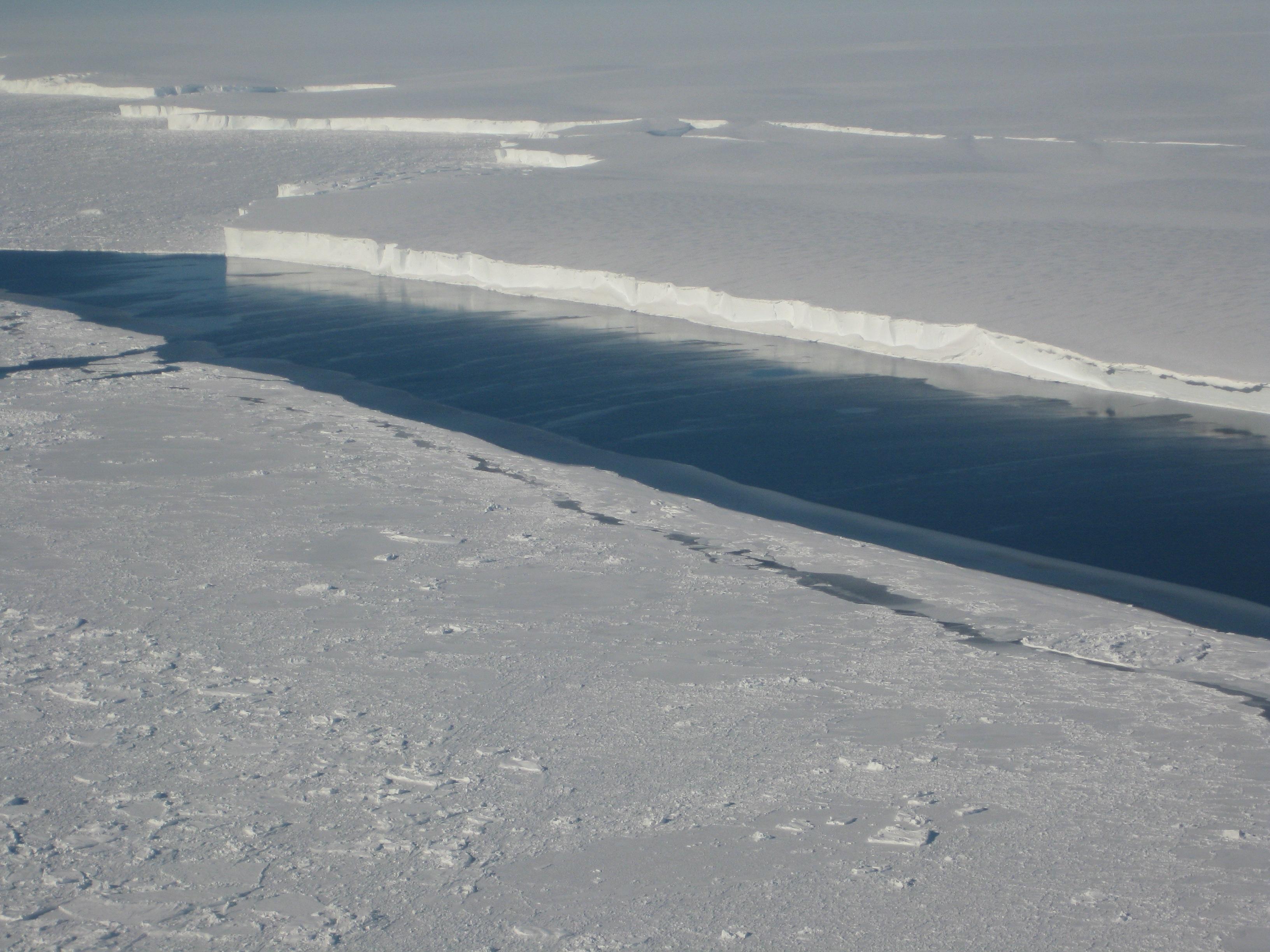
January 14, 2048
From that date, any Consultative Party may convene a review conference. The protocol does not expire, but the procedural barrier to reopening the debate is reduced. That is the window that the powers are measuring.
The continent that no one could conquer
When Fabian von Bellingshausen sighted the ice shelf in January 1820, Antarctica entered European history as an object of curiosity, not as territory. For a century no one set foot inside. The first expeditions to the Antarctic plateau of Amundsen and Scott in 1911 and 1912 were not takeover operations, but scientific and sporting feats in conditions that the law of the time did not know how to process.
The colonial 20th century did try to process it. Between 1908 and 1942, seven States formulated successive claims: the United Kingdom in 1908, New Zealand in 1923, France in 1924, Australia in 1933, Norway in 1939, Chile in 1940 and Argentina in 1942. The last three overlapped on the same Antarctic Peninsula. The United States and the Soviet Union never made a claim, but neither did they renounce the right to do so. The arithmetic of the territory became impossible before the infrastructure existed to occupy it.
The seven territorial claims
The United States and Russia did not make a claim but reserve the right. Article IV of the Antarctic Treaty froze this cartography without recognizing or canceling it.
In 1947, the United States deployed Operation Highjump, the largest military expedition to Antarctica ever carried out: 4,700 men, 13 ships, 33 aircraft. The official operation was polar training and mapping. What it produced was evidence that projecting sustained military force on that continent was logistically brutal and economically irrational. Operation Highjump did not uncover Nazi bases or UFOs, contrary to popular mythology. He discovered that Antarctica is not conquered; is administered.
The International Geophysical Year of 1957 and 1958 provided the final element of the puzzle. Twelve countries operated scientific stations for eighteen months, sharing data at unprecedented levels. When it was over, the White House summoned those twelve countries to Washington. The Treaty was signed on December 1, 1959. It entered into force in June 1961. The paradox of the white continent was codified in international law: no one owns it, everyone can investigate, no one can fight.
Antarctica is the only territory on the planet where state sovereignty was put on hold by consensus. Not abolished. Not transferred. Paused. Enrique Benet-Gregg · May 2026
Why Antarctica produces fantasies
Conspiracy theories about Antarctica do not deserve to direct the analysis, but it is worth understanding why they exist. A remote, hostile, little-visited continent, administered by technical treaties and surrounded by historic military operations, provides the perfect canvas for ignorance to fill in the gaps with narrative.
Aliens, Nazi bases and Operation Highjump
The conspiracy version holds that the 1946-47 American expedition found non-human technology, hidden Nazi bases or an underground civilization, and that the Antarctic Treaty was designed to cover it up.
Verifiable reality: Highjump was a real military-scientific operation: polar training, cartography, aerial photography, navigation and logistics. Its scale was enormous because Antarctica was the extreme laboratory of the postwar period. The mystery is not alien; It is geopolitical and logistical.
Flat Earth and “ice wall”
The flat earth narrative makes Antarctica the edge of the world and states that the Treaty prevents crossing it to hide the end of the terrestrial plane.
Verifiable reality: The Treaty does not prohibit visiting or crossing Antarctica. It regulates activities south of 60° S, requires national permits, environmental evaluation and respect for protected areas. Thousands of scientists, logistics operators and authorized tourists enter each year.
“Beyond” lands and hidden continents
The idea maintains that beyond the Antarctic barrier there are undisclosed territories, prohibited maps or areas administered by powers that hide a different geography.
Verifiable reality: Antarctica is observed by satellites, airborne radar, scientific campaigns and international navigation. What remains incomplete is not secret continents, but expensive data: subglacial topography, ice dynamics, bathymetry and deep geology.
The UN map as “proof”
Some readings take the United Nations emblem as evidence for a flat map, with Antarctica deliberately omitted or made into a border.
Verifiable reality: The UN emblem uses an equidistant azimuthal projection centered on the North Pole. It is a graphic and diplomatic decision: no continent visually dominates the symbol. A projection is not a cosmological statement; It is a mapping tool with known distortions.
The Treaty as a cover-up lock
The conspiratorial reading says that if so many countries signed a treaty to “close” Antarctica, something extraordinary must be hidden.
Verifiable reality: The Treaty did the opposite: it opened up scientific research, froze sovereignty claims, demilitarized the continent, and allowed reciprocal inspections. The system does not work through absolute concealment, but through minimal transparency, consensus and environmental control.
2048 as automatic reveal or opening date
Another version states that in 2048 the Madrid Protocol “expires” and Antarctica will automatically be opened for mining, bases or unrestricted access.
Verifiable reality: The Protocol does not expire in 2048. The possibility of calling a review conference is opened. Modifying the mining ban requires very high thresholds and a binding legal regime on mineral resources. The date matters, but not by magic: it matters by procedure.
Why there is speculation: Antarctica combines physical distance, little direct experience, opaque legal language, difficult maps, lethal conditions, real military operations, and incomplete scientific data. This mixture produces a narrative void. When society does not understand how an international regime operates, it tends to imagine a conspiracy where in reality there is bureaucracy, logistics, science, state interests and law.
Why it matters to dismantle it: absurd theories distract from real risks. You don't have to invent aliens for Antarctica to be relevant. Just look at the Russian seismic data, genetic bioprospecting, the blocking of MPAs in CCAMLR, the procedural window of 2048, Chinese logistical competition, the US budget retreat and the Latin American vacuum. Effective reality is less cinematic, but much more dangerous.
The forces that produced the regime
The 1959 Treaty and the 1991 Madrid Protocol are not products of international idealism. They are the result of converging forces that, in two waves separated by thirty years, made protection the only viable option for all actors with veto power.
First wave · 1959
Why was the Antarctic Treaty signed
Nuclear fear
In the midst of the Cold War, neither side wanted the continent to become a nuclear test site or a radioactive waste repository. Article I's total military ban and Article V's ban on nuclear explosions were the minimum cost of mutual insurance.
The success of the Geophysical Year
Eighteen months of effective scientific cooperation between the US, the USSR and ten other countries demonstrated that a multilateral regime was empirically possible. Without that operational precedent, the treaty would have been a rhetorical exercise without traction.
The irresolvable territorial knot
Seven claims with three overlapping on the Peninsula did not admit a stable diplomatic solution. Article IV did not solve the problem: it froze it. Nobody recognizes, nobody renounces. A unique solution in contemporary international law.
The negative economic calculation
In 1959, Antarctic resource extraction was technically and economically unfeasible by several orders of magnitude. Giving up something that couldn't be exploited had zero cost. Today that calculation is changing, and that is why 2048 matters.
The bipolar opportunity
Washington and Moscow shared an interest in preventing any individual claimant country from consolidating dominance over the continent. Geopolitical neutralization favored the two superpowers. The regime was built on that alignment of interests.
Reciprocal inspection
Article VII permitted unannounced cross-inspections between any Party. It was the verification clause that made the military ban credible. Without formal enforcement but with mandatory transparency, the incentive to violate the regime was reduced to manageable levels.
Second wave · 1991
Why was the Madrid Protocol signed
The collapse of CRAMRA
The Convention on Antarctic Mineral Resources negotiated in Wellington in 1988 would have allowed mining under a strict regime. Australia and France withdrew in 1989. Bob Hawke and Michel Rocard proposed outright bans instead. Without that withdrawal, today we would be discussing royalties, not a veto.
The discovery of the ozone hole
The British Halley Bay station confirmed the depletion of the ozone layer over Antarctica in 1985. The continent ceased to be a distant wasteland and became visible evidence of the global impact of human consumption. Political pressure was reorganized.
The post-Exxon Valdez environmental movement
The 1989 Alaska spill transformed the reputational calculus of extraction in fragile areas. Greenpeace operated its own base in Antarctica between 1987 and 1991. The "responsible exploitation" narrative lost political viability in the West.
The end of the Cold War
The fall of the wall opened a short window of multilateral cooperation. Madrid was signed in October 1991, two months before the formal dissolution of the USSR. The Soviet signature was one of Moscow's last foreign policy decisions as a superpower.
The momentum towards Rio 1992
The United Nations Conference on Environment and Development was being prepared for June 1992. Madrid became the emblematic preamble of the new multilateral environmental regime. The United States signed in part so as not to arrive in Rio empty-handed.
The scientific consensus on fragility
Two decades of research under the Treaty had produced unequivocal evidence that Antarctic ecosystems are irreplaceable and ice records irreplicable. The science generated by the regime ended up justifying a stronger regime. A virtuous cycle.
The five pillars and constructive ambiguity
The 1959 Treaty operates on five structural provisions that support the entire architecture of the regime. The Madrid Protocol added a sixth pillar with six annexes, one of which has not yet entered into force twenty-one years after it was adopted. The centerpiece of the building is article IV.
The article I establishes exclusive peaceful use. Prohibits the creation of military bases and the carrying out of maneuvers. Antarctica is the first demilitarized continent in the history of modern international law.
The article IV It is the masterpiece. Its formulation is deliberately ambiguous: it simultaneously preserves the position of claimants and non-claimants. That "agreement on disagreement" that Anglo-Saxon international law calls constructive ambiguity It is what makes the Treaty universally acceptable. No State had to give up its legal position to sign it. Argentina continues to believe that its sector is Argentine sovereign; The United States continues to believe that there is no recognizable Antarctic sovereignty; both sign the same treaty and operate under it for six decades. It is not a design defect. It's the design.
The article V prohibits nuclear testing and disposal of radioactive waste. The article VII establishes the right of inspection: any Party may designate observers to inspect stations and ships without prior notice. It is the verification clause that made the military ban credible without formal enforcement. The article IX establishes Consultative Meetings as a mechanism for continuous governance by consensus.
The Madrid Protocol added the environmental dimension with six annexes: environmental impact assessment (I), conservation of fauna and flora (II), waste elimination (III), prevention of marine pollution (IV), protection and administration of areas (V), and responsibility derived from environmental emergencies (VI). Annex VI was adopted in Stockholm in 2005 and has not yet entered into force because it requires approval from all Consultative Parties that attended ATCM XXVIII. Japan submitted Annex VI to the Diet in 2026 for ratification. Twenty-one years of delay in activating an annex already adopted by consensus is the most visible indicator of the institutional stress of the system.
The Antarctic regime is not sustained by enforcement. It is sustained by constructive ambiguity. When this ambiguity can no longer contain divergent interests, the system erodes from within without the need for formal rupture.Analysis of IBG Legal · May 2026
From Cold War consensus to geopolitical fracture
Twenty-three milestones that explain how we got from the IGY of 1957 to CCAMLR Hobart 2024, the entry into force of the BBNJ Agreement in January 2026 and ATCM 48 in Hiroshima. Each card is clickable for expanded detail.
Bellingshausen sights the ice shelf
The Russian imperial navigator is the first European to sight the Antarctic continental mass. The modern era of the continent as an object of international law begins.
The United Kingdom formulates the first modern territorial claim
It extends jurisdiction over the Falkland Islands Dependencies, including the Antarctic sector. The era of claims begins that will culminate with seven overlapping countries.
The massive American deployment
The US Navy deploys 4,700 men, 13 ships and 33 aircraft. The operation demonstrates that projecting sustained military force on the continent is viable but economically irrational.
Argentina fires on a British base
Argentine personnel open fire with machine guns on members of a British expedition. United Kingdom sends warship. Overlapping claims are armed fuel.
The experiment that made the regime possible
Twelve countries operate scientific stations in Antarctica for 18 months. The success of cooperation between rival blocs in the middle of the Cold War creates the political conditions to institutionalize the regime.
Signature of the Antarctic Treaty
Twelve States sign the Treaty. Total demilitarization, scientific freedom, freezing of claims. Fourteen articles that reorganize the legal cartography of the southern hemisphere.
Convention on Marine Living Resources
Ecosystem regime for fishing and krill. Decisions by consensus. The rule that today allows Russia and China to block marine protected areas.
China enters the Antarctic Treaty
Consultative status in 1985. A polar program begins that four decades later will have five stations and the largest krill fishing vessel in the world under construction.
Confirmation of the ozone hole
The British team publishes in Nature the evidence of severe stratospheric ozone depletion over Antarctica. The continent goes from distant wasteland to global climate indicator.
CRAMRA: the mining treaty that almost was
It would have allowed mining under a strict regime. Australia and France withdraw from the process in 1989 and propose a total ban. CRAMRA never goes into effect.
Signature of the Madrid Protocol
Designates Antarctica as a "natural reserve dedicated to peace and science." Article 7: absolute prohibition of all mining activities except scientific research. No expiration date.
Validity of the Madrid Protocol
The 50 years of article 25 begin to tick. The clock that ends in January 2048 begins here.
Russia begins sustained seismic survey in area claimed by the United Kingdom
Akademik Karpinsky (Rosgeo, the Russian state geology company) carries out seismic surveys in the Weddell Sea, within the British Antarctic Territory. Declared as science.
Whaling in the Antarctic: Australia v. Japan
The International Court of Justice rules that the Japanese JARPA II program was not "scientific research" under Article VIII of the Whaling Convention. Only binding decision by a high-profile tribunal on the Antarctic system.
Russia and China block expansion of MPAs
For the sixth consecutive year, the creation of new Marine Protected Areas is paralyzed. The consensus required by CCAMLR becomes a veto weapon.
Adoption of the BBNJ Agreement (High Seas Treaty)
The UN adopts the Agreement on the Conservation and Sustainable Use of Marine Biological Diversity in Areas Beyond National Jurisdiction. Introduces provisions on marine genetic resources (MGR).
China inaugurates Qinling Station, the fifth
Fifth Chinese station, the largest in area. Capacity for 80 researchers in summer and 30 in winter. Operation all year round. First hybrid energy system (wind, solar, hydrogen, diesel) in Antarctica, with 60% of the capacity from renewables.
British Parliament: 511 billion barrels
The House of Commons Environment Audit Committee receives evidence that quantifies Russia's mapped potential at 511 billion barrels. Almost double Saudi Arabia's proven reserves.
Russia and China block new MPAs
At the 43rd meeting of CCAMLR, Russia and China once again put the brakes on the creation of new Marine Protected Areas and relevant conservation measures. The pattern extends into 2025.
Severe budget cuts to USAP
The Administration proposes to reduce NSF polar research by 71% (from $86 million to $25 million). Polar cap proposed at $500M, 26% drop from $680M authorized in FY24. The RV Nathaniel B. Palmer is decommissioned.
Entry into force of the BBNJ Agreement
Once 60 ratifications have been reached, the High Seas Treaty comes into force. Provisions on marine genetic resources (MGR) in areas outside national jurisdiction, with obligations of due diligence, information exchange and benefit sharing.
ATCM 48 in Hiroshima
Third time that Japan hosts the meeting, after 1970 and 1994. Agenda: comprehensive framework for tourism, simplification of the EIES System, debates on Annex VI, management of Qinling Station, designation of the emperor penguin as a Specially Protected Species.
The Madrid Protocol review window opens
From this date, any Consultative Party may convene a review conference. The protocol does not expire. What changes is the procedural ease to reopen the discussion on article 7.
The factor that reorganizes everything else
Any serious analysis of a 50-year horizon must place climate change as a primary variable, not as a context. In the Antarctic case, climate change does not only affect the ecosystem. Reorganizes the physical accessibility of the continent, the economics of extraction and the legal balance of the regime.
The Antarctic Peninsula has warmed between three and five degrees Celsius in the last fifty years, one of the fastest rates of warming on the planet1The IPCC Sixth Report (AR6 WG1, 2021) identifies the Antarctic Peninsula among the most rapidly warming regions. Data from the British Antarctic Survey confirm local rates higher than 3°C in some areas during the 20th century.. The West Antarctic Ice Sheet (WAIS) is on a path of partial collapse on time scales of 50 to 150 years according to the most conservative projections2DeConto and Pollard (Nature, 2016) and subsequent work from the Antarctic Ice Sheet Project suggest that WAIS could contribute between 0.5 and 3 meters of sea level rise over 100 to 200 year horizons under high emissions scenarios.. The continent's ice-free areas are projected to increase by up to 25 percent by the end of the century under severe climate forcing scenarios.
The above implies three consequences for the legal regime that most analyzes overlook. First, logistics accessibility improves. Each degree of warming extends the operational season, reduces the thickness of sea ice and opens previously impassable routes. The break-even arithmetic that makes extraction unfeasible today becomes less hostile over time, not more. Second, the continent becomes more visible as an object of global governance. Every meter of sea level rise from Antarctic contribution generates international political pressure to regulate the continent. Pressure can translate into reinforcement of the regime, but also into an attempt to redefine it. Third, the fresh water contained in the ice caps becomes a quantifiable strategic asset, not a scientific category. Seventy percent of the planet's fresh water is in Antarctica3USGS and NASA standard estimate. The total volume of the Antarctic ice sheet is equivalent to approximately 26.5 million cubic kilometers of fresh water.. In severe regional water crisis scenarios, Antarctic icebergs could become extractable assets before hydrocarbons.
The geopolitical calculus of 2048 should not be read against the world of 2026, but against the world of 2050. In that world, the energy transition will have already matured (reducing pressure for hydrocarbons) but demand for critical minerals for batteries, fresh water and marine protein could be greater. Climate change is not uniform in its effects on extractive viability: it depresses the urgency for oil and increases the urgency for other resources. The Antarctic regime that was designed in 1959 to suspend mining extraction could face pressures in 2048 that are not what was anticipated.
The magnitude and diversity of the resources at stake
Five categories concentrate the strategic calculation: hydrocarbons, marine biomass, fresh water, genetic bioprospecting and critical minerals for the energy transition. The hydrocarbon figures activated the geopolitical discussion, but the other four may be as or more relevant in different periods.
Potential mapped by Russian seismic in the Weddell Sea. Almost double Saudi Arabia's proven reserves.
Figure not verified in open scientific literature. Presented to the British Parliament in May 2024.
Concentrated in the ice caps. Approximately 26.5 million km³. In severe regional water crisis scenarios, towing icebergs to eager markets becomes economically plausible before hydrocarbons.
Towing projects to the Persian Gulf studied by the National Adviser Bureau (UAE) since the 1970s.
Antarctic Extremophiles generate pharmaceutical patents, industrial enzymes and cosmetic compounds. China leads recent publications. The asymmetry between prohibiting mining and allowing genetic extraction without a shared benefit regime is the most active contradiction of the system in 2026.
The BBNJ Agreement came into force on January 17, 2026 with explicit provisions on MGR. Several ATS Parties claim that the Antarctic regime is already "competent", but the claim is weak given the regulatory gap documented since 2002.
Official US list in 2025: 60 materials essential for national security and economic resilience, including copper, cobalt, lithium, nickel, rare earths. Antarctica has unquantified deposits. It is the blind spot of traditional economic analysis focused on hydrocarbons.
Unlike oil, demand grows structurally with the energy transition. Copper could double its demand by 2040.
Strategic marine protein. One of the largest biomasses on the planet. Omega-3 market derived from krill grows at double digits annually. Only industrial exploitation already underway under the regime.
China builds the world's largest krill trawler. CCAMLR regulates annual fees under pressure.
Gold, iron, carbon, zinc, lead. Knowledge limited by the prohibition of non-scientific prospecting. The Transantarctic mountain range shows geological evidence of potentially significant deposits.
Gold and metallic minerals more realistic than coal over long horizons.
Oil potential: strategic magnitude, no proven reserve
The Antarctic figure is an estimate of mapped geological potential, not a proven reserve with SEC criteria. The graph compares strategic order of magnitude, not technical equivalence, between categories of reserves.
The impossible arithmetic of extraction
The reason the ban has endured six decades is not just legal. It's economical. Extracting a barrel of oil from the Weddell Sea today would cost several times what it costs to extract it from the Russian Arctic, and the Russian Arctic is already on the brink of viability.
A CSIS study published in 2026 estimated that the price of a barrel would have to exceed $200 on a sustained basis for commercial oil extraction in Antarctica to be viable. For context: the all-time high price was $150 in June 2008.
The Arctic offers useful reference. Current Arctic projects have breakevens between $50 and $90 per barrel according to Rystad data cited by Deloitte. Gazprom's Prirazlomnaya platform produces at $60 with substantial state subsidies and operated with a deficit of close to $600 million annually. Shell's Burger project in the Chukchi Sea would have required sustained prices above $100. Shell retired in 2015.
Antarctica changes all arctic variables to the worst extreme. Icebergs that can plow the seabed, mobile ice packs, extreme distance to industrial centers, non-existent logistics infrastructure, operational season reduced to three or four months.
There is a second underestimated economic factor. Shale oil, which was marginal in 2010, is today the predominant source of hydrocarbons in the United States at costs comparable to conventional oil. The resources available outside Antarctica measured at current prices exceed 30 years of global consumption, possibly 100. There is no economic urgency to touch Antarctica. The urgency is strategic and positioning, not supply.
But the calculus changes with critical minerals. Copper, cobalt, nickel and rare earths do not have the problem of shale. Their prices do not deflate with substitute technology because they are irreplaceable physical inputs for batteries and renewable energy. If global demand for copper doubles in 2040, the Antarctic extraction breakeven for those elements could become less prohibitive. This is where scenario III of the analysis (Madrid 2.0) gains plausibility.
Comparative break-even
The Antarctic break-even is a theoretical projection based on extreme conditions; no real project exists to validate it empirically.
The legal crack of the extended continental shelf
The Antarctic regime does not operate in a vacuum. It coexists with the United Nations Convention on the Law of the Sea (UNCLOS) of 1982. The interaction between the two is one of the unresolved legal issues in the system. It is the escape route that some States could use to reopen claims without attacking Madrid directly.
Article 76 of UNCLOS allows coastal States to claim continental shelf extended up to 350 nautical miles from the baseline, through technical submission to the Commission on the Limits of the Continental Shelf (CLCS)4The CLCS is a technical-scientific body of the United Nations that evaluates the geological and geophysical evidence that States present to substantiate claims beyond 200 nautical miles.. The Antarctic legal question is: can a continental claimant state claim the continental shelf adjacent to its claimed sector under UNCLOS, given that Article IV of the Antarctic Treaty freezes its claims to the continent itself?
Australia, Argentina and Norway have submitted submissions to the CLCS that include shelf areas adjacent to their Antarctic claims. To avoid the direct legal problem, the three have asked the Commission do not evaluate those portions for the moment. The maneuver is elegant: they preserve the technical right to claim while formally remaining within the Antarctic regime. The United Kingdom and Chile have made similar movements. They are all prepared, legally, to activate Antarctic continental shelf claims the day the regime weakens sufficiently.
The interaction creates an institutional paradox. Article IV of the Antarctic Treaty freezes claims to the continent. UNCLOS Part VI allows claims on the continental shelf. The continental shelf is geologically an extension of the continent. By logic, freezing one should freeze the other. But no treaty says it explicitly. Indeterminacy is deliberate and can be activated.
If a review conference is convened in 2048 and the threshold to amend Madrid is not reached, an elegant way out for frustrated claimants would be to push for their submissions to the CLCS to be finally evaluated. That would not require touching the Antarctic Treaty or the Protocol. It would reopen maritime cartography without violating land cartography. And the Antarctic continental shelf is exactly where the hydrocarbons that matter are.
The Antarctic regime has a back door that no one has closed: the continental shelf under UNCLOS. Whoever wants to reopen the discussion without attacking Madrid head-on has the route designed.Analysis of IBG Legal · May 2026
The second legal crack that opened January 2026
The BBNJ Agreement on Conservation and Sustainable Use of Marine Biological Diversity in Areas Beyond National Jurisdiction entered into force on January 17, 2026 after reaching 60 ratifications. It is the second recent international regime that coexists with the ATS and generates active legal tension. It was created by the UN in 2023; 60 States parties activated it three years later.
The BBNJ Agreement introduces explicit provisions on marine genetic resources (MGR) in areas beyond national jurisdiction. It includes due diligence obligations, exchange of digital information of genetic sequences and distribution of benefits derived from exploitation. It is the legal framework that the Antarctic Treaty System never produced for Antarctic bioprospecting.
Since 2000, SCAR and CEP identified the gap. The ATCM has discussed bioprospecting at multiple meetings since 2002 without producing binding Measures. Meanwhile, biotechnological patents on Antarctic genetic resources are growing rapidly, led by China. The operative question is: does the BBNJ apply to the Antarctic Treaty Area?
Several Consultative Parties claim that the ATS already constitutes a "competent and comprehensive" framework for Antarctic MGRs, which would preclude application of the BBNJ. The claim is legally weak. The BBNJ defines what is considered a competent and comprehensive framework, and requires explicit rules on the topics it regulates. The ATS does not have them. Tracey and Craik at the One Ocean Science Congress 2025 documented that the assertion of competence is institutional defense without normative support.
The implications are threefold. First, the next BBNJ Conference of the Parties could declare that the ATS is not a competent framework for Antarctic MGRs, opening direct application of the new regime. Second, ATS Parties could respond by eventually producing explicit bioprospecting rules, which would require consensus that Russia and China would likely block. Third, an international arbitration on the interpretation of "competent framework" could emerge before 2035, with consequences for the entire maritime multilateral system. Scenario II of the analysis (erosion through cracks) feeds directly into this tension.
The BBNJ is the first 21st century regime that the Antarctic Treaty System has to process institutionally. The ability of the ATS to respond defines whether the regime remains the architect or becomes the object of higher regimes.IBG Legal · May 2026
How other spaces without sovereignty are governed
The Antarctic regime is not unique. It is part of a family of international regimes that administer spaces where traditional state sovereignty does not apply. Comparing them allows us to see what institutional mechanisms are available to design what comes after 2048.
| Regime | Covered space | Sovereignty | Resources | Review | Structural weakness |
|---|---|---|---|---|---|
| Antarctic Treaty1959 / 1991 | Continent and waters south of 60° S | Frozen | All mining extraction is prohibited | Conference from 2048 | No formal enforcement; consensus required |
| Space Treaty1967 | Outer space, Moon, celestial bodies | Not appropriable | Without explicit regime | Without formal clause | Void about asteroid mining and Moon |
| UNCLOS Part XI1982 | Seabed outside national jurisdiction | Common heritage | Regulated by ISA | Amendments via agreement 1994 | Mining Code incomplete; royalty conflict |
| Svalbard Treaty1920 | Svalbard Archipelago, Norwegian Arctic | Full Norwegian sovereignty | Equal economic access | Without formal clause | Tension with Russia and China over interpretation |
| Moon Agreement1979 | Moon and other celestial bodies | Not appropriable | Subject to future regime | Conference at 10 years | Not ratified by USA, Russia, China |
The comparative lesson is uncomfortable. The Antarctic regime is the strongest of the five, but the other four illustrate the four ways in which such a regime can be destabilized: leaving regulatory gaps (Outer Space), building unfinished institutions (UNCLOS Part XI), generating tensions over interpretation (Svalbard), or going without ratification by the actors that matter (Moon Agreement). Any of the four pathologies can appear in Antarctica post-2048.
The machinery that supports the regime
The Antarctic Treaty does not administer itself. The Antarctic Treaty Consultative Meeting (ATCM) is the central institution where system decisions are processed. Understanding how it works is understanding where the procedural fracture points are.
The ATCM has met annually since 1961. ATCM 48 is held in Hiroshima, Japan, from May 11 to 21, 2026, the third time that Japan has hosted the meeting after 1970 and 1994. The 29 Consultative Parties participate with voice and vote. The other 29 Non-Consultative Parties attend as non-voting observers. Decisions are made by consensus, meaning that any Consultative Party can block any proposal. That rule, designed to guarantee legitimacy, is also the main institutional crack in the system.
The ATCM produces three types of instruments. The Measurements They are legally binding once approved by all Consultative Parties. The Decisions They are internal political obligations of the regime. The Resolutions They are recommendations without binding force. The distinction matters: recent production has shifted toward Resolutions and the current ratio is approaching 3:1, an indicator that consensus is becoming more difficult to achieve even for administrative matters.
The Committee for Environmental Protection (CEP) is the technical-environmental body created by the Madrid Protocol. It meets in parallel with the ATCM and makes recommendations on compliance with the environmental regime. The Antarctic Treaty Secretariat has operated from Buenos Aires since 2004 with just ten officials, eight full-time. It translates documents into the four official languages (Spanish, English, French and Russian) and manages the Electronic Information Exchange System (EIES). The agenda of ATCM 48 places on the table the simplification of the EIES and compliance with reporting requirements.
The institutional critical points facing 2048 are three. First, the consensus rule blocks not only amendments but also the creation of new Marine Protected Areas. CCAMLR has not established new MPAs for more than eight years, with four proposed zones that, if approved, would protect 26 percent of the Southern Ocean. Second, the ATCM does not have sanctioning capacity. When a State violates a Measure, the only institutional response is a political declaration. The UK Parliament received testimony in May 2024 about Russian seismic activity in the Weddell Sea, but no State has formally invoked the Article VII inspection mechanism. Third, Annex VI on liability for environmental emergencies was adopted in Stockholm in 2005 and has not yet entered into force. Twenty-one years of delay in activating an annex already approved by consensus is a visible indicator of internal institutional dysfunction.
The three actors who are rewriting the regime
Russia and China are the visible actors on the revisionist side. The United States operates in a different register: it does not press, but it no longer defends with real capacity. India, South Africa, Brazil and other supporting players could determine the outcome in 2048 more than traditional powers.
Scientific stations and activity zones
Approximate geographical positions. The marked areas indicate areas of greatest recent strategic activity. China's Kunlun Station (4,087 m) is the highest point on the continent, ideal for astronomical observation and satellite monitoring. The SIGINT dimension of the Chinese polar program is one of the least discussed topics of the current regime.
Prospecting under scientific coverage
- Akademik Karpinsky conducting sustained seismic in Weddell Sea since 2011, intensified between 2020 and 2024.
- Five scientific stations operated since 1957, without territorial claim but with reserved rights.
- Systematic blocking of Marine Protected Areas in CCAMLR since 2016.
- No official announcements of discoveries. All activity declared as science in accordance with the Treaty.
- Aggravated position after 2022: Western sanctions increase the strategic value of alternative reserves.
From observer to alternative architect
- Five seasons. Qinling (Feb 2024) in Ross Sea, capacity 80 summer and 30 winter researchers, year-round operation.
- First hybrid energy system in Antarctica (wind, solar, hydrogen, diesel) with 60% renewables in Qinling.
- Kunlun at Dome A (4,087 m), highest point on the continent, actual SIGINT value.
- 42nd Antarctic expedition with more than 500 members (Nov 2025) aboard Xuelong and Xuelong 2.
- Biotechnological patents on Antarctic genetic resources on the rise rapidly without benefit regime.
- March 2025: China and Russia announce separate but coordinated plans to strengthen presence.
The silence that is also withdrawal
- Three stations (McMurdo, South Pole, Palmer). FY26 NSF request of $522M, 16% drop from prior year.
- Polar cap proposed at $500M, 26% drop from the $680M authorized in FY24.
- Research polar cut 71%. Education cancelled. Decommissioning of the ship Nathaniel B. Palmer.
- Has not invoked Article VII against Russia despite British parliamentary evidence from 2024.
- Policy changes on Alaska and Greenland suggest a willingness to relax environmental regimes if geopolitics warrants it.
Secondary actors with emerging blocking power
Expanded Polar Program
- Three scientific stations with sustained growing budget.
- Aspirations for greater prominence in ATCM and SCAR.
- Position not aligned with Western or Russian-Chinese blocs.
- Possible pivotal voice in the 2048 conference due to its multilateralist tradition.
Logistics hub and regional pivot
- South Africa: Cape Town is a critical access hub for multiple polar programs.
- Brazil: intermediate position between North and South, defender of the environmental regime with a growing voice.
- Iran and Pakistan have indicated interest in future accession.
- Emerging global South as a potential bloc in 2048 if it achieves articulated regional coordination.
Estimated polar budgets by country
The Trump administration proposed cutting NSF polar research by 71% (from $86M to $25M). Congress moderated the Commission-approved cap cuts of up to $700M, recognizing that "competitors are establishing new efforts in Antarctic research." Additionally, the proposal includes $900M for a new Antarctic icebreaker: strategic presence preserved, scientific capacity cut. China does not publish official breakdown; COMNAP and SCAR estimates.
The economic activity that is already happening
While mining extraction is prohibited, Antarctic tourism grows steadily and offers a microcosm of how the regime manages economic uses without violating its prohibitive spirit. It is worth watching as a foreshadowing of what is to come.
The 2023-2024 season recorded 122,072 visitors; 2024-2025 closed with 118,4915IAATO, Report of the International Association of Antarctica Tour Operators 2024-25, ATCM 47 WW012, presented in Milan in 2025. ATCM 46 IP102 rev1 contains the 2023-24 figure and preliminary estimates for 2024-25.. Approximately 95 percent of tourism occurs on the Antarctic Peninsula, with dozens of high-use sites under ATCM/IAATO guidelines and a strict limit of 100 simultaneous people per site. The industry is self-regulated via IAATO, a private organization that brings together commercial maritime operators.
Three lessons from the tourism regime for the rest of the system. First, private economic activity can coexist with the prohibitive regime if it is subject to strict operational standards and credible industrial self-regulation. Second, the geographical concentration (95 percent in the Peninsula) means that the regime distributes the pressure unevenly: the areas claimed by Argentina, Chile and the United Kingdom receive practically all the impact. Third, the trend is for structural growth. Operators report saturated demand and prices that have risen steadily in the last decade.
What tourism prefigures for 2048 is important: if the regime managed to manage 122,000 annual visitors without collapsing under the current self-regulatory system, it could hypothetically manage regulated bioprospecting, pilot-scale freshwater extraction, or even expanded krill fishing under an analogous institutional scheme. The question is not whether all economic activity is incompatible with the regime. The question is which ones, on what scale, under what controls, and with what shared benefit. The 2048 review conference could start exactly there, not with mining.
Four trajectories for the next half century
Qualitative estimates expressed as ranges. The probabilities are not derived from formal quantitative modeling but from structured analysis against observed trajectories in comparable regimes. The horizon extends to 2075 because the materialization of any scenario will take two to three decades after the window opens.
Estimated scenario bands
The graph avoids false averages: the useful point is not the center of the range, but the amplitude of uncertainty and the relative distance between scenarios.
Reinforced continuity
Drivers
Global acceleration of the energy transition. Antarctic break-even cost above $200 per barrel makes extraction unfeasible under any realistic price scenario. Hydrocarbon demand in structural decline post-2040. Global social pressure for preservation.
Legal mechanics
Review conference convened in 2048 or later years. Intense debate. The threshold of three quarters plus binding regime is not reached. Possible reinforcement of article 7 through political declarations, not formal amendment.
Economic implications
Capital continues to be deployed in conventional and renewable basins. The seismic data accumulated by Russia loses commercial value but retains residual strategic value. Expansion of MPAs in CCAMLR is unlocked when geopolitics allows consensus.
Residual risks
The scenario depends on the energy transition remaining ongoing. A geopolitical crisis that reactivates fossil dependence could quickly destabilize this scenario. Continuity is the most likely outcome but not the most stable.
Erosion through cracks
Drivers
States systematically exploit the ambiguity of Article 7. Intensive seismic, expansive bioprospecting, data as a transferable commodity, "applied science" as a diffuse legal category. The formal regime remains, but its material meaning is progressively emptied.
Legal mechanics
There is no amendment. There is no break. There is regulatory erosion due to elastic interpretation and omission of enforcement. Article VII of reciprocal inspections becomes a dead letter because no State wants to generate reciprocal precedent.
Economic implications
Permanent positioning without declared commercial extraction. Seismic and bathymetric data become strategic assets tradable between like-minded powers. Chinese and Russian state companies accumulate operational logistics capacity without the need to formally violate the regime.
Risks
It is the most insidious scenario because it does not allow clear political mobilization. Outrage requires a disruptive event, not a series of gradual erosions. It works as a springboard towards scenarios III and IV if geopolitical conditions worsen.
Madrid 2.0
Drivers
Severe climate crisis increases global demand for critical minerals for energy transition: lithium, cobalt, rare earths, copper. China leads the proposal for a new legal architecture that opens regulated extraction in strictly delimited areas, under a modernized CRAMRA-style regime.
Legal mechanics
New protocol regulates extraction through a mechanism analogous to the International Seabed Authority (ISA) under UNCLOS Part XI. Shared royalty regime, mandatory environmental impact assessment, multilateral supervision.
Economic implications
Controlled opening of specific areas. Capital flows to multinational consortia with technological capacity and state support. Emergence of the market for Antarctic extraction rights. Beneficiaries: States with prior logistics capacity (China, Russia, USA, Norway, Australia, India).
Risks
The CRAMRA precedent shows that regulatory regimes for extraction in fragile areas tend to collapse if political pressure is asymmetric. Stable only if the complementary environmental regime is robust. If not, it becomes scenario IV.
Unilateral breakup
Drivers
Acute energy crisis. Extreme sanctions that isolate Russia or China from the international financial system. Major conflict between powers that dissolves the logic of multilateral cooperation. One or more States decide that the reputational cost of the breakup is less than the strategic benefit.
Legal mechanics
Article 25 does not create an ordinary free exit: withdrawal with two years' notice appears as a conditional possibility after a review conference and an approved modification does not come into force within the expected period. The most plausible route of rupture, therefore, is not a clean denunciation, but rather material violation or prospecting/extraction declared as "expanded science" without formally withdrawing.
Economic implications
Race for resources in conditions of open competition. Gradual militarization of claimed areas. Significant environmental damage in pilot operations. Reorganization of the southern geopolitical order with consequences on maritime routes, South America, South Africa and Australasia.
Risks
It is the least likely scenario but the most consequential. Armed conflict in the southern zone is not inconceivable: territorial disputes between Argentina, Chile and the United Kingdom over the Peninsula remain unresolved. The loss of the Antarctic regime would also weaken the Space Treaty and other similar regimes.
The regime monitoring dashboard
To make the analysis an instrument of surveillance and not a sole reading, this section identifies the observable indicators that the serious reader can monitor over the next twenty years. Any significant change in these metrics signals movement in the regime's trajectory.
Arrows indicate directional trend, not quantitative projection. The dashboard should be updated annually with data from ATCM, CCAMLR, COMNAP, IAATO, SCAR, NSF, national parliaments and reports from specialized polar organizations.
The south that is not written but decides
Latin America is the region of the world geographically closest to the Antarctic continent. Six Latin American countries are Consultative Parties with a formal voice in the ATCM. Mexico is not part. That asymmetry matters for the next twenty years.
The oldest claim
Territorial claim since 1942 on 1.4 million km². Overlapping with Chile and the United Kingdom. Continuous scientific operation from Orcadas Base (1904). National Antarctic Policy regulated by Decree No. 2316 since 1990, with updating decree in October 2024. Headquarters of the Antarctic Treaty Secretariat in Buenos Aires since 2004. CLCS submission with active Antarctic reserve.
The strategic neighbor
Claim of 1940. Overlapping with Argentina and the United Kingdom. Punta Arenas is the main world logistics hub towards Antarctica. New National Antarctic Policy approved in October 2024 (Decree 31 of the Ministry of Foreign Affairs), includes the Chilean Antarctic Statute (Law 21,255) and Strategic Plan 2021-2025.
The regional power
Without territorial claim but with consultative status since 1983. Comandante Ferraz Station (1984), rebuilt in 2019. Brazilian Antarctic Program with sustained budget. Intermediate position: defender of the environmental regime but with latent economic interest in marine living resources and biotechnology.
Consultative without claim
Ecuador, Peru and Uruguay have consultative status. They operate more modest scientific programs than Argentina, Chile and Brazil, but they have a formal voice in consensus decisions. Its weight could increase if Latin America coordinates positions or if the system fractures into blocks.
The absence that is a decision
Mexico is the only OECD member in Latin America outside the Antarctic Treaty. Mexican researchers have carried out publications and campaigns in Antarctica operating from platforms in other countries. Accession would have a low cost and a high reputational return: it would incorporate Mexico to the table of the most successful international legal instrument of the second half of the 20th century, with a voice in one of the great geopolitical discussions of the 21st century. The optimal accession window, given the conditions of Mexican foreign policy and the Antarctic calendar, is 2027-2035.
Non-Consultative Parties and absences
Colombia, Venezuela, Cuba, Costa Rica and Guatemala are Non-Consultative Parties. They participate without voting. Bolivia, Paraguay and most of Central America and the Caribbean remain outside the regime. For these States, formal membership would still be a concrete diplomatic advantage, even before building their own scientific presence.
The authors and cases that matter
Any serious analysis of the Antarctic regime must dialogue with consolidated academic doctrine and available jurisprudence. This section summarizes the main authorities for the reader who wants to go deeper.
Foundational authority in contemporary Antarctic law. His work "Antarctica and the Law of the Sea" established the framework for analyzing the interaction between the Antarctic regime and UNCLOS. Emphasis on ecosystem governance and marine living resources regime.
Specialist in the Madrid Protocol and the environmental protection regime. Participated in CRAMRA negotiations. His work is a reference to understand why the total ban was reached and what tensions remain latent.
Co-author of the standard manual on the regime. Emphasis on the interaction between the Antarctic Treaty, UNCLOS and the practice of claimant States. He has extensively analyzed the implications of submissions to the CLCS.
Main reference in environmental governance of the Antarctic Treaty System. He has published sustained criticism of the institutional erosion of the regime and the failure of CCAMLR to create new MPAs. Necessary voice to understand the "institutional stress" of the system.
Specialist in regulation of commercial activities under the regime, including tourism and bioprospecting. His analysis of the gray areas of the Madrid Protocol is relevant to understanding gradual erosion scenarios.
Political-institutional analysis of the ATCM and CCAMLR. Recent works on the Russian-Chinese blockade of MPAs and on the rise of China in the Antarctic system. Co-edits the Polar Yearbook, annual reference for the field.
Recent analysis (Environmental Policy and Law, 2025) on future governance of the ATS and its relationship with the UN system. Includes analysis of the Guardianship Council proposed as an alternative institutional model. Relevant Latin American academic voice in a literature dominated by Anglo-Saxons.
Relevant jurisprudence
Australia v. Japan. The ICJ ruled that the Japanese JARPA II program did not constitute "scientific research" under Article VIII of the International Whaling Convention. It is the only binding decision by a high-profile international tribunal on an Antarctic system matter. It establishes the principle that scientific self-qualification is not enough: there must be reasonable proportionality between methods, scale and declared scientific objectives. Applicable by analogy to the debate on Russian seismic prospecting under article 7 of the Madrid Protocol.
They are not formal jurisprudence but constitute observable state practice. The four states have submitted submissions touching on areas adjacent to their Antarctic claims, asking the Commission to "not evaluate" those portions at this time. The practice preserves the technical right without activating it. Its future activation would be a major legal event.
What each scenario means by industry
For institutional audiences, the implications of the four scenarios are different depending on the sector. This section breaks down the sector effects for banking, insurance, energy, ESG, defense, corporate law and strategic consulting.
Energy and commodities
- Scenario I: no movement. Capital remains in conventional and renewable basins.
- Scenario II: Real options on Russian seismic data begin to be priced in speculative markets.
- Scenario III: opening of the market for extraction rights in critical minerals. Multinational state consortia emerge.
- Scenario IV: race for resources. Price spikes in hydrocarbons. Reorganization of global chains.
Banking and capital markets
- Scenario I: ESG continues to penalize capital exposed to Antarctica. No change.
- Scenario II: emergence of financial instruments structured on latent extractive options.
- Scenario III: new polar project finance market. Multilateral banks (IBRD, EIB, AIIB) compete to finance infrastructure.
- Scenario IV: financial sanctions as an enforcement tool. Disruption of the polar SWIFT system if it appears.
Insurance and reinsurance
- Scenario I: Antarctic tourism continues to require specialized coverage. No major change.
- Scenario II: premiums for broad scientific operations increase due to regulatory uncertainty.
- Scenario III: new environmental insurance market for regulated extractive operations. Policies with mandatory multilateral coverage.
- Scenario IV: uninsurable risk. Venture capital or direct state support would be the only vehicles.
Defense and SIGINT
- Scenario I: Satellite presence and monitoring remains a primary function. No formal militarization.
- Scenario II: Dual use of scientific stations intensifies without public recognition. It's already happening.
- Scenario III: new regime includes provisions on security and monitoring. Possible international inspection body.
- Scenario IV: gradual militarization. Argentina-Chile-United Kingdom in the southern zone have latent disputes. Escalation risk.
International corporate law
- Scenario I: consulting on environmental compliance for tourism and scientific operations. Stable frame.
- Scenario II: international arbitration on interpretation of "scientific research". Specialized practice growth.
- Scenario III: massive opportunity: structuring multinational extractive consortia, concession contracts, shared royalty regimes.
- Scenario IV: investment arbitration under bilateral treaties. Possible state expropriation of private assets.
Latin America · regional opportunity
- Argentina and Chile: in all scenarios, greater regional prominence. Increased risk of bilateral friction.
- Brazil: pivotal position between Western bloc and BRICS. Potential winner in Madrid 2.0.
- Mexico: Adherence to the Treaty would have a low cost and a high reputational return. Optimal window: 2027-2035.
- Logistics hub: Punta Arenas (Chile) and Ushuaia (Argentina) would see an increase in activity. Investment in port infrastructure with a horizon of 2050.
Unlike other treaties of the 20th century, the Antarctic regime was not negotiated to win a dispute. It was negotiated to stop having it. Its historical utility was to suspend questions that no one could answer in 1959. The question the regime faces today is different: can a global space be managed by consensus when the actors producing the consensus have divergent interests that are no longer manageable within the structure of mutual benefits that gave rise to the agreement?
Antarctica is the only laboratory where the world successfully tested that sovereignty can be paused. If that experiment fails, it is not just Antarctica that will be lost. It loses the very idea that international law can administer what armies cannot conquer.
Notes, sources and declaration
Notes to the text
- 1.IPCC Sixth Report (AR6 WG1, 2021). Local data from the British Antarctic Survey on Antarctic Peninsula warming.
- 2.DeConto, R. M., and Pollard, D. (2016). "Contribution of Antarctica to past and future sea-level rise." Nature, 531(7596), 591-597. Further work by the Antarctic Ice Sheet Project (ISMIP6).
- 3.US Geological Survey and NASA. The Antarctic ice sheet is equivalent to approximately 26.5 million km³ of fresh water.
- 4.Commission on the Limits of the Continental Shelf (CLCS), United Nations. Rules of Procedure and submissions of Australia (2004), Norway (2009), Argentina (2009), United Kingdom (various).
- 5.International Association of Antarctica Tour Operators (IAATO). ATCM 46 IP102 rev1 for 2023-24 figures and 2024-25 preliminary estimates; ATCM 47 WW012 for official closure 2024-25.
Primary and institutional sources 2024-2026
- ·Antarctic Treaty (Washington, December 1, 1959). Antarctic Treaty Secretariat, Buenos Aires.
- ·Protocol to the Antarctic Treaty on Environmental Protection (Madrid, October 4, 1991), official text with six Annexes.
- ·Convention on the Conservation of Antarctic Marine Living Resources (CCAMLR, Canberra, 1980).
- ·United Nations Convention on the Law of the Sea (UNCLOS, 1982), especially articles 76, 77 and Part XI.
- ·BBNJ Agreement on the Conservation and Sustainable Use of Marine Biological Diversity of Areas Outside National Jurisdiction (June 2023, effective January 17, 2026).
- ·Whaling in the Antarctic (Australia v. Japan), ICJ, judgment of March 31, 2014.
- ·United Nations, United Nations Emblem and Flag: Official description of the equidistant azimuthal projection centered on the North Pole.
- ·US National Archives, Operation Hi-jump: Exploring Antarctica with the U.S. Navy, on the American operation of 1946-47.
- ·CSIS (2026). Governing Antarctica in 2026, William Muntean III, May 11, 2026.
- ·CCAMLR, Closing Communications CCAMLR-43 (2024) and CCAMLR-44 (2025).
- ·Lowy Institute, Antarctic Diplomacy's Back to Basics Test, April 2026.
- ·Ministry of Foreign Affairs of Japan, ATCM 48 Hiroshima, May 11-21, 2026.
- ·NSF/USAP, FY24, FY25, FY26 Budget Documents. Polar Journal June 2025.
- ·High Seas Alliance, Ratification Tracker BBNJ, effective January 17, 2026.
- ·IAATO ATCM 46 IP102 rev1: 122,072 visitors 2023-24; IAATO ATCM 47 WW012: 118,491 visitors 2024-25.
- ·UK House of Commons Environment Audit Committee, evidence received in May 2024 on Russian activity in the Weddell Sea.
- ·Argentina, Decree No. 2316 (1990) on National Antarctic Policy, with update decree in October 2024.
- ·Chile, Decree 31 of the Ministry of Foreign Affairs (October 2024) on National Antarctic Policy. Chilean Antarctic Statute (Law 21,255).
- ·Final 2025 Critical Minerals List (USA): 60 strategic materials.
Academic literature and doctrine
- ·Silberberg, C.I. (2025). The Near Future Governance of Antarctica: Challenges and Opportunities. Environmental Policy and Law, 55(1).
- ·Tracey, H.E. and Craik, N. (2025). Reconsidering Antarctic Marine Bioprospecting Governance in Light of the BBNJ Agreement. One Ocean Science Congress, Nice.
- ·Joyner, C.C. (1992). Antarctica and the Law of the Sea. Martinus Nijhoff.
- ·Rothwell, D.R. and Hemmings, A.D. eds. (2012). Antarctic Security in the Twenty-First Century. Routledge.
- ·Vidas, D. (2000). Implementing the Environmental Protection Regime for the Antarctic. Springer.
- ·Scott, K.N. — Specialist in regulation of commercial activities under the Antarctic regime.
- ·Haward, M. — Co-editor of the Polar Yearbook (University of Tasmania).
Declaration of interests
The author declares that he has not received funding from governments involved in the Antarctic regime, from extractive industries with potential interest in polar resources, or from conservation non-governmental organizations with an active presence in CCAMLR or ATCM. The analysis occurred within the framework of IBG Legal's regular professional work, without external sponsorship.
The opinions expressed are personal and do not constitute specific legal advice. The probabilistic ranges assigned to the scenarios are the author's qualitative judgments and are not derived from formal quantitative modeling. Anyone interested in using this analysis for operational decisions in Antarctic jurisdictions should consult local specialist advice in each of the relevant State Parties.
Editorial note and image use
IBG Legal special project written from the perspective of Latin American civil law. Economic data verified against CSIS (2026), Rystad Energy via Deloitte, Oxford Institute for Energy Studies and U.S. Energy Information Administration. The figure of 511 billion barrels in the Weddell Sea comes from evidence presented to the UK House of Commons Environment Audit Committee in May 2024 and is not verified in open scientific literature. USAP budget data verified against public documentation from the National Science Foundation, FY26 Budget Request. Tourism data verified against IAATO ATCM 46 IP102 rev1 and ATCM 47 WW012. Scenario probabilities are the author's qualitative judgments expressed as ranges. Doctrine and jurisprudence cited are standard academic reference. Archive photographs via NASA Photojournal, NASA Image Library and NASA.gov, archived locally for this publication. Editorial and informational use under NASA Images and Media Usage Guidelines; visible credits do not imply NASA sponsorship, review or endorsement. This document does not constitute specific legal advice.